
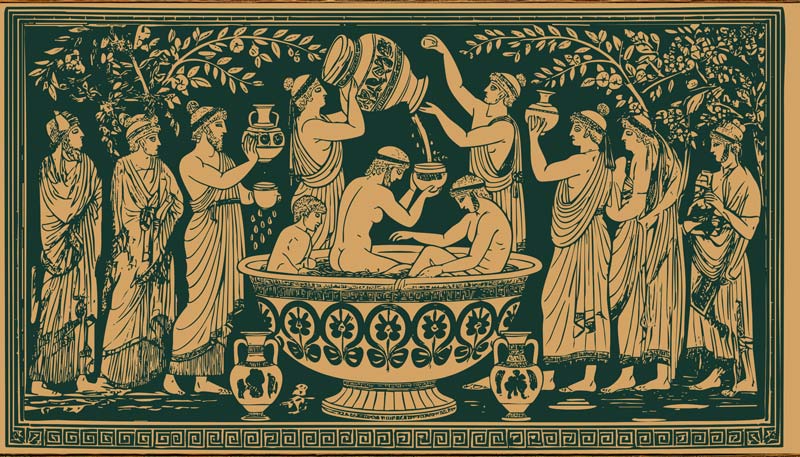
In ancient Greece, bathing was far more than a simple act of cleansing. It was considered an essential part of physical and mental balance, social life, and personal care. The Greeks believed that true health and harmony came from the connection between body and mind, and their bathing culture reflected this philosophy beautifully. Public baths were not only places of regeneration but also centers of social life, where philosophical discussions, political debates, and moments of peaceful relaxation naturally came together.
The Development of Greek Bathing Culture
In the early days, the Greeks bathed mainly in natural springs and rivers, with warm mineral springs being especially valued. Over time, the first bathhouses appeared, offering cold and warm pools as well as steam baths designed to cleanse the body and support recovery.
Sport and physical culture held an important place in ancient Greek society, which is why athletes regularly bathed after training sessions and competitions. Bathing became an important part of recovery rituals, often enhanced with herbs and essential oils to soothe tired muscles and refresh the body.
The Role of Herbs in Greek Baths
The Greeks deeply trusted the healing power of nature, which is why bathwater was often enriched with herbs and aromatic oils. These ingredients not only created pleasant scents but also supported relaxation, skincare, and overall well-being.
Lavender (Lavandula angustifolia)
Lavender was one of the most beloved bath herbs thanks to its calming and harmonizing effects. It helped reduce stress, promote restful sleep, and create a sense of inner peace.
Rosemary (Rosmarinus officinalis)
Rosemary was valued for its stimulating properties. It improved circulation, refreshed the mind, and was especially popular among athletes and warriors.
Thyme (Thymus vulgaris)
Thyme was known for its cleansing and purifying qualities. The Greeks often used it in baths to support immunity and help clear the respiratory system.
Myrtle (Myrtus communis)
Myrtle was associated with beauty and femininity and was closely connected to Aphrodite, the goddess of love and beauty. Fragrant myrtle baths were believed to soften and purify the skin.
Bay Laurel (Laurus nobilis)
As a sacred plant of Apollo, bay laurel symbolized strength and purification. It was frequently added to restorative baths intended to relax muscles and support recovery.
Myths and Rituals
In Greek mythology, baths carried an almost divine significance. According to one legend, Hebe, the goddess of youth, prepared magical baths for the gods that preserved their vitality and eternal youth. People believed that herbal baths could renew not only the body but also the spirit.
Another story tells of Penelope, the wife of Odysseus, who relaxed each evening in baths scented with lavender and myrtle while waiting for her husband’s return. The legend emphasized the soothing and beauty-enhancing qualities of bathing rituals.
Bringing Ancient Greek Bathing Rituals Into Modern Life
The bathing traditions of ancient Greece can still inspire modern self-care rituals today. A warm herbal bath can help us slow down, relax the body, and restore inner balance after a long day.
- Fill the bathtub with comfortably warm water.
- Add herbs such as lavender, rosemary, or thyme.
- Use natural bath salts to nourish the skin.
- Create a calming atmosphere with candles or soft music.
Final Thoughts
For the ancient Greeks, bathing was a conscious ritual that supported both physical regeneration and mental calmness. Even today, the use of natural herbs can transform an ordinary bath into a restorative experience and offer a peaceful escape from everyday stress.
The message of ancient Greek bathing culture remains timeless: sometimes true renewal can be found in silence, warm water, and the calming power of nature.