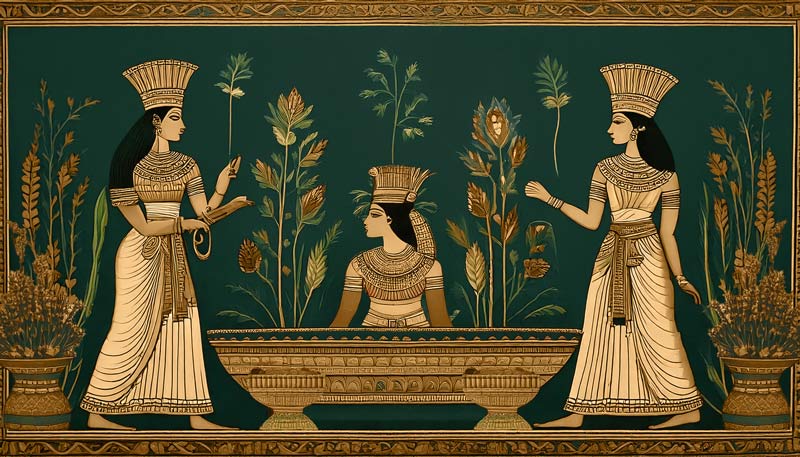
Ancient Egypt was known not only for its pyramids and pharaohs, but also for its remarkable culture of beauty and body care. For the Egyptians, bathing was far more than a simple act of hygiene — it was an important ritual of physical and spiritual purification. Herbs, fragrant oils, and natural extracts played a central role in daily skincare and relaxation rituals.
The bathing traditions of ancient Egypt symbolized harmony, beauty, and a deep connection with nature.
The Importance of Bathing in Ancient Egypt
Water held a special place in Egyptian culture. The Nile was not only a source of life, but also a symbol of cleansing and renewal. Regular bathing was an essential part of daily life, especially among priests, nobles, and rulers.
The wealthier classes enjoyed baths enriched with aromatic oils and healing plants, placing great importance on hydration and skin care. Physical cleanliness was also closely connected to inner balance and spiritual harmony.
Herbs and Natural Ingredients in Egyptian Baths
The Egyptians used a wide variety of herbs, plant oils, and natural ingredients in their bathing rituals. These were valued not only for their fragrance but also for their beneficial effects on the skin and overall well-being.
Lotus (Nymphaea caerulea)
The blue lotus was considered one of the sacred plants of ancient Egypt. It symbolized peace, renewal, and spirituality, and was often used in baths and fragrant rituals.
Myrrh (Commiphora myrrha)
Myrrh was a precious natural resin known for its deep and warm aroma. Egyptians used it in relaxation rituals and skincare practices.
Rose (Rosa damascena)
The rose symbolized beauty and femininity. Rose petals and rose water helped soften the skin while adding a luxurious fragrance to baths.
Aloe Vera (Aloe barbadensis)
Aloe vera was one of the most valued plants in Egyptian skincare. It was especially appreciated for its hydrating and soothing properties, particularly for dry or sun-exposed skin.
Lavender (Lavandula angustifolia)
Lavender was used for its calming scent and relaxing effects. It often became part of evening bathing rituals.
Henna (Lawsonia inermis)
Henna was not used only for decorating the body and hair. It was also valued in skincare rituals for its refreshing and protective qualities.
Cleopatra’s Legendary Baths
The name Cleopatra remains closely associated with beauty and luxurious self-care. According to legend, she regularly bathed in milk and honey to maintain soft and radiant skin.
Milk contains natural lactic acid, which gently softens the skin, while honey is known for its hydrating properties. Her baths were often enriched with rose petals, fragrant oils, and herbs that created a truly luxurious sensory experience.
Bringing the Atmosphere of Egyptian Baths Into Your Home
The inspiration of ancient Egyptian bathing rituals can easily be recreated in a modern home setting.
- Fill your bathtub with comfortably warm water.
- Add rose petals, aloe vera, or lavender.
- Use natural honey or rose water to nourish the skin.
- Fragrance the bath with myrrh or lavender oil.
- Allow yourself time to slow down, rest, and fully relax.
Final Thoughts
Ancient Egyptian bathing culture combined beauty, nature, and inner harmony into unique rituals of body and mind care. The use of herbs and natural ingredients can still inspire modern self-care routines for those seeking a calmer and more mindful approach to relaxation.
A fragrant bath enriched with natural ingredients can become a simple yet meaningful ritual of peace, renewal, and reconnection with yourself.